I was first introduced to the work of Neil Postman when my advisor in the College of Education loaned me a copy of “Teaching as a Subversive Activity” and the text to a speech he gave the same year based on that book, entitled “Bullshit and the Art of Crap-Detection”.
His basic thesis, that teaching should not be about the transfer of facts but instead should be focused on teaching kids to ask and explore meaningful questions, is even more valid these days. And developing their “crap detectors”.
Flash forward a couple of decades to the 90’s, I was transitioning out of the classroom, into a new job supporting teachers with the computers and other technologies being installed in schools.
And I reconnected with Postman through his book “Technopoly: The Surrender of Culture to Technology”. It turned out to be especially relevant to the role I had assumed.
In that book, Postman defined technopoly as “a society in which technology is deified… ‘the culture seeks its authorisation in technology, finds its satisfactions in technology, and takes its orders from technology”’”. Sound familiar?
Although the work is somewhat dated, as you might expect more than thirty years later, his basic concepts are still extremely relevant and I highly recommend the book.
But, if you’d rather not deal with “reading”, you can also get a good feeling for Postman’s ideas from this video of a talk he gave in 1996.
In it he proposes six very prescient questions all of us should be asking anytime new technologies are introduced.
1. What is the problem this technology addresses?
2. Whose problem is it?
3. What problems do we create by solving this problem?
4. What changes in language occur as a result of technological change?
5. Which people and institutions acquire economic and political power when this technology is adopted?
6. Which people and institutions might be harmed by this technology?
Do you suppose we should have applied these to AI a couple of years ago before joining the stampede to add it every part of human life?
Maybe we can start this inquiry with the next big thing. The one soon to be introduced with great fanfare by companies who don’t already have enough of our attention, money, and resources.
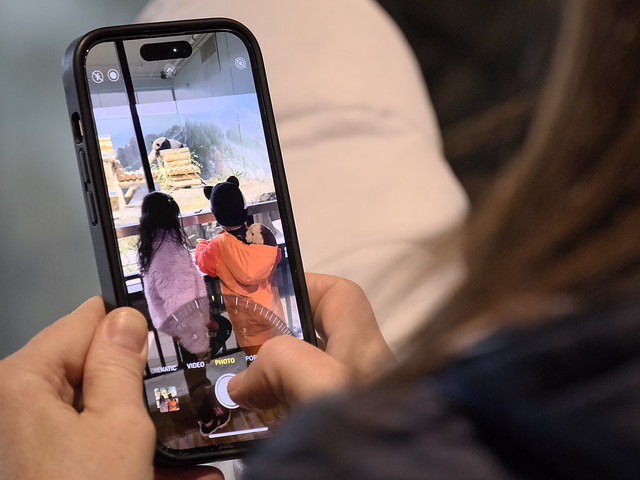
I guess it’s too late to ask those questions about the networked computers-with-cameras (that incidentally make “phone” calls) in everyone’s pocket. Including visitors to the panda house at the National Zoo.