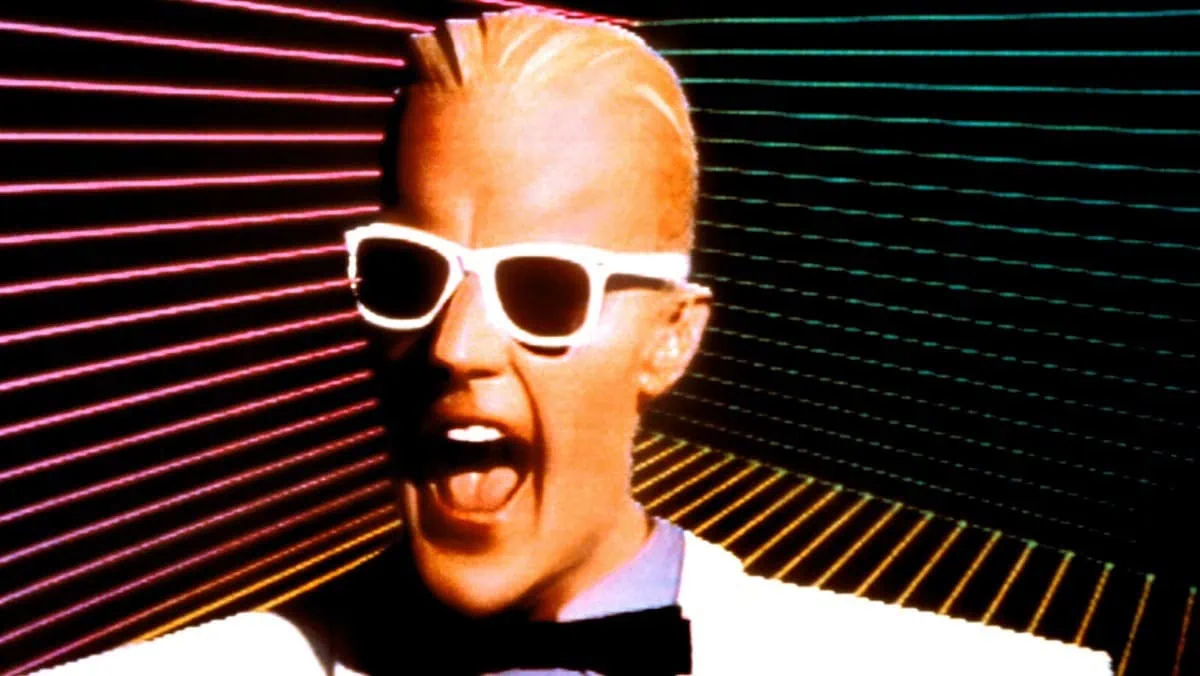
When it comes to artificial intelligence, we are very much at the beginning stages of development. Most of the tools have a lot of bugs in them and the results can be anywhere from almost real to catastrophically bad.
When it comes to artificial intelligence, we are very much at the beginning stages of development. Most of the tools have a lot of bugs in them and the results can be anywhere from almost real to catastrophically bad.

On January 1 of every year, a batch of creative works fall out of copyright and become available for anyone to freely copy, transform, and combine.1
Welcome to Public Domain Day 2023.
Three readings worth your time this week.
It’s a long read, but this story at Huffington Post offers a great look at how the National Football League works hard to hook kids on their product (“tobacco-style” may be slightly hyperbolic), including the development of a fantasy league for 6 year olds. The League’s TV ratings have taken a big drop this season so the company has a lot riding on growing the audience. (about 32 minutes)
Patton Oswalt is a very talented, funny performer. But a year ago, his wife died suddenly at the age of 46, leaving him to raise their 7-year old daughter. In this honest, touching post he talks about his Year of Magical Parenting. (about 4 minutes)
IBM’s Watson made a big splash a few years ago playing Jeopardy. But if you switch to Monopoly, that big brain wouldn’t even know where to start. We hear a lot about artificial intelligence but an opinion writer at Wired says the current systems are more artificial than intelligent. And it’s likely to stay that way for a while. (about 3 minutes)
Two audio tracks for your commute.
Is college worth it? NPR addresses that question by following a group of students from suburban Washington, DC who graduated high school in 2011 or 2012 to discuss their experiences and the choices they made. It’s an interesting program but the pre-roll sponsor is Columbia University, which makes me wonder a little about the objectivity of the reporting. (49:52)
Most people in the US don’t understand copyright, and especially their rights under the concept of fair use. In the first segment of a new podcast on the topic, Kirby Ferguson, who coined the phrase “everything is a remix”, introduces the idea that even Star Wars is a mixture of story elements going back centuries. A little geeky but still an interesting start. (8:50)
One video to watch when you have time
I am big advocate for using maps to help people visualize a variety of topics, and not just geography. This video from Vox is a great explanation of why all world maps are wrong and where the Mercator Projection, the format used by Google and most other mapping systems, came from. This is a good one to show your middle or high school students. (5:59)
You’ve probably never heard of the Trans-Pacific Partnership (TPP) – and that’s by design. TPP is “is a secretive, multi-national trade agreement that threatens to extend restrictive intellectual property (IP) laws across the globe and rewrite international rules on its enforcement.”
The governments involved, and the hundreds of corporations who are helping to write the provisions, want us to know as little as possible before it becomes law.

Fortunately, enough information about the contents has leaked to offer a good, if very chilling, picture of how the package “would have extensive negative ramifications for users’ freedom of speech, right to privacy and due process, and hinder peoples’ abilities to innovate.”
Because supporters of TPP are worried about the backlash that would result if more people had a good look at the provisions, they are pushing Congress to pass a “fast track” bill for this and similar trade agreements.
If passed, the “Bipartisan Congressional Trade Priorities Act” would give over to the executive branch much of the exclusive constitutional authority over trade policy that Congress is supposed to exercise. Sponsors of the bill claim that this process “provides greater transparency and gives Congress greater oversight of the Administration’s trade negotiations.” But in fact, fast track does precisely the opposite, ensuring that there’s even less transparency and less democratic oversight over trade negotiations, while making it easier for Big Content to impose its wish list of draconian copyright provisions on the US and its trading partners through secretive trade pacts.
Read the facts that are known about TPP and the efforts to force it’s provisions into American law. Then join the Electronic Frontier Foundation and other groups in demanding that Congress “stand up for your digital rights and preserve our constitutional checks and balances in government.”
Almost since the first digital file was posted on the web, lobbyists for the big copyright holders, like the RIAA, have been working to slow down illegal copying of media. Between DRM, lots of lawsuits, and the buying of Congress critters, their clients are still watching their old business models (primarily one of restricting access to their products) slip away.
Now they’re trying a more subtle approach: education, in the form of “thinly disguised corporate propaganda” for elementary-level kids.
In an anti-piracy curriculum to be tested in California schools later this year, teachers will present students with scenarios conveying the message that it is never appropriate to reuse copyrighted materials. Never! Older kids are told it’s always considered stealing while for 1st graders copying is just plain “mean”.
But what about fair use, the concept in copyright law that under certain circumstances, it is completely appropriate to use part of a copyrighted work? And Creative Commons, under which content creators openly license the use of their creations?
According to Marsali Hancock, president of the The Internet Keep Safe Coalition, one of the designers of this program, “fair use is not a part of the teaching material because K-6 graders don’t have the ability to grasp it.” Their curriculum does believe that second graders are old enough to understand the concept of marketing their photographs online.
The introduction to Creative Commons is equally simplistic and carrying a corporate bias.
The fifth-grade lesson introduces the Creative Commons license, in which rights holders grant limited permission on re-use. But even in explaining the Creative Commons, the lesson says that it’s illegal to make any copies of copyrighted works. That’s a message that essentially says it’s even unlawful to rip CDs to your iPod.
“If a song or movie is copyrighted, you can’t copy it, download it, or use it in your own work without permission,” according to the fifth-grade worksheet. “However, Creative Commons allows artists to tell users how and if their work can be used by others. For example, if a musician is okay with their music being downloaded for free – they will offer it on their website as a ‘Free download’. An artist can also let you know how you can use their work by using a Creative Commons license.”
The vice president of the California School Library Association, the organization that co-produce the material says “We’ve got some editing to do.”, which, based only on what’s presented in this story, is an understatement.
What all the groups involved with “Be a Creator” (yes, that’s the proposed title) don’t appear to remember is that this kind of heavy handed, one-sided approach to “educating” students didn’t work in the 90’s when the Software Publishers Association used story and song to preach “Don’t Copy That Floppy“. I suspect this effort will fall flat with it’s target audience as well.
Kids have grown up sharing and repurposing almost anything in digital form and some slick corporate propaganda won’t change that. Which means we not only need to help our students understand copyright law but also model for them how to responsibly exercise their fair use rights within those laws.
On the other side of things, the copyright industry needs to acknowledge that fair use is real and come to terms with the idea that bits of their content are going to be reused, remixed, and shared. It may not fit with their traditional business model but, in the long run, that process is good for both the people who create media and the culture at large.